
Rafael Simon · 24 October 2026
Mapping Shifts in Mineral Supplies to Platform Oversight and Integration Program Assessments
Analysts track changes in mineral supplies by connecting extraction volumes, trade routes and processing capacities directly to the regulatory frameworks that govern digital platforms and the evaluation processes for integration programs across multiple regions. Data from government geological surveys show that lithium, cobalt and rare earth elements experienced notable rerouting in 2025 as new mining operations came online in Australia and Canada while traditional suppliers adjusted output levels. These adjustments feed into assessments that determine how platform operators meet compliance standards tied to supply chain transparency rules.
Platform oversight mechanisms now incorporate mineral supply indicators as one factor among several when regulators evaluate whether large digital services maintain adequate risk management protocols. Figures from the US Geological Survey indicate global lithium production rose by 18 percent between 2024 and 2025, with much of the increase flowing through processing facilities that also handle materials used in data center components. Integration program assessments in turn examine whether member states or partner economies align their infrastructure investments with these shifting material flows.
Supply Chain Adjustments and Data Inputs
Researchers compile datasets that link specific mineral grades to hardware requirements for cloud services and content delivery networks, then cross-reference those datasets against oversight criteria used by regulatory bodies. Australian government reports document expanded rare earth exports to European and North American markets during the first half of 2026, while Canadian authorities published updated reserve estimates that altered projected availability timelines for several critical inputs. Observers note that these updates arrive at a moment when integration program reviews increasingly require evidence of diversified sourcing before approving continued funding streams.
One study released by a European research consortium in September 2026 mapped cobalt flows from Central African mines through Asian refineries and onward to manufacturers supplying server components, revealing concentration points that platform operators must now address in their annual compliance filings. The same study showed that rerouting through additional North American processing sites reduced single-point dependency by measurable percentages, information that feeds directly into integration program scoring systems.
Platform Oversight Criteria and Mineral Tracking
Regulators apply mineral supply metrics when reviewing platform adherence to transparency and resilience standards, requiring operators to demonstrate how they monitor upstream material risks. Canadian regulatory documents outline assessment templates that list mineral availability as a variable alongside energy reliability and workforce capacity. European Commission working papers from mid-2026 reference similar tracking requirements within broader digital services legislation, where supply documentation forms part of the evidence submitted during periodic reviews.
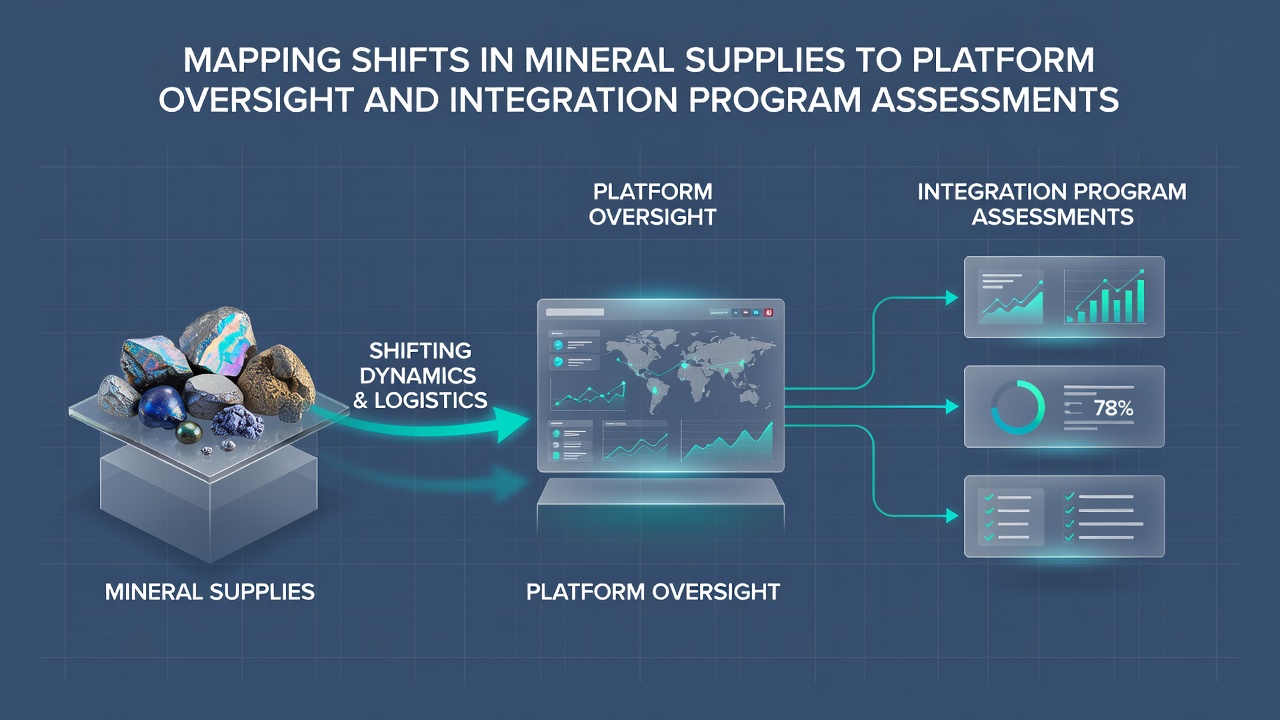
October 2026 marks the scheduled release of updated integration program guidelines that explicitly reference mineral supply mapping outputs as an input for eligibility determinations. Those guidelines build on earlier frameworks by adding quantitative thresholds for supply concentration risk, drawn from datasets compiled by multiple national geological agencies. Platform operators receive advance notice of these thresholds so they can adjust procurement strategies ahead of the next assessment cycle.
Integration Program Evaluation Processes
Evaluation teams for integration programs gather evidence on how participating economies manage mineral inflows that support digital infrastructure, then score alignment against agreed benchmarks. Academic papers from Australian universities analyze correlations between mineral import stability and the rollout timelines of national broadband and data center projects, providing reference material that program assessors consult. These papers highlight cases where supply disruptions delayed hardware deployment by several months, prompting revisions to integration milestones.
US trade data released in late 2025 showed increased exports of processed graphite to European manufacturers, a shift that integration program reports now cite when measuring progress toward diversified supply objectives. Program documents record the percentage of critical components sourced from suppliers with audited traceability systems, creating a direct numerical link between mineral supply documentation and program performance ratings.
Cross-Regional Data Sharing Mechanisms
International working groups coordinate the exchange of mineral supply statistics so that platform oversight bodies and integration program evaluators operate from consistent information. Reports prepared jointly by Canadian and Australian agencies in 2026 detail standardized reporting formats that reduce discrepancies when data moves across borders. These formats allow oversight teams to compare platform compliance claims against verified trade volumes without requiring separate verification steps for each jurisdiction.
Conclusion
Mapping exercises continue to evolve as new mineral supply data becomes available and oversight frameworks incorporate additional variables. Integration program assessments scheduled after October 2026 will apply the refined mapping outputs to determine funding allocations and compliance statuses for participating platforms. Government agencies maintain ongoing updates to the underlying datasets, ensuring that evaluations reflect the most recent production and trade figures from all major supplier regions.