Greta Wolf · 21 November 2026
Germany's Grid Delays Ripple Through Mineral Imports and Corporate Green Mandates
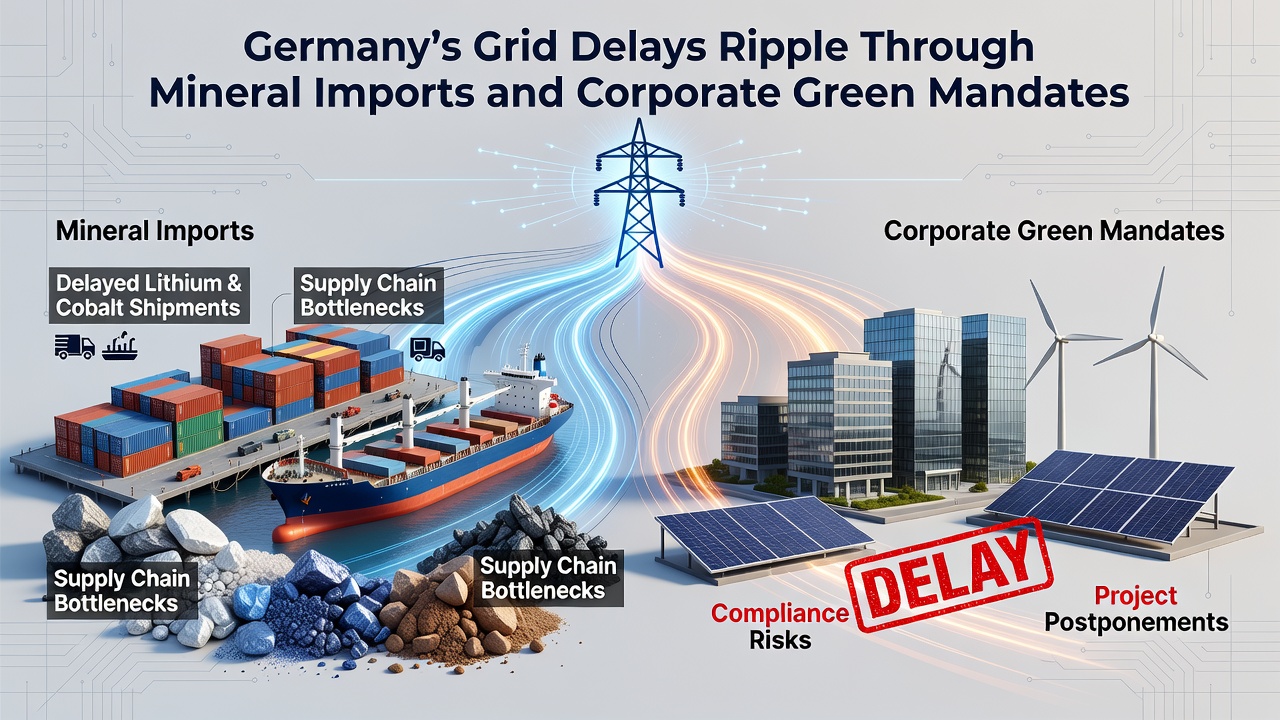
Germany's electricity transmission network continues to face capacity constraints that trace back through supply chains to critical mineral imports while corporate sustainability targets encounter new friction points, and data from November 2026 shows project timelines stretching further as utilities prioritize stability upgrades over rapid expansion.
Grid Bottlenecks and Their Reach
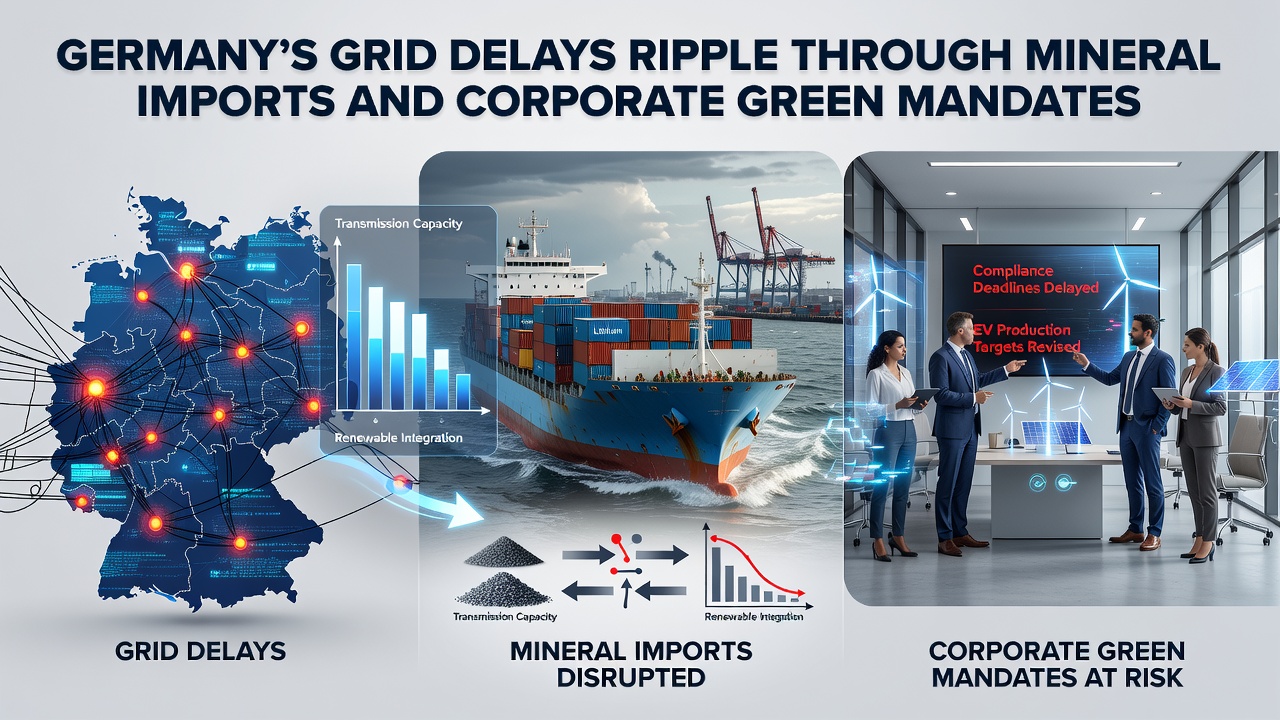
Transmission operators report that approval processes and physical construction lags have pushed several high-voltage corridors behind schedule, which in turn limits the integration of new wind and solar capacity across northern and eastern regions. Observers note that these delays coincide with rising demand for materials such as copper, lithium, and rare earth elements used in cabling, transformers, and battery storage systems. Import volumes for these minerals have fluctuated in recent quarters because downstream project pipelines remain uncertain, according to trade statistics compiled by federal agencies.
Energy planners have documented that roughly 40 percent of planned onshore wind additions scheduled for 2025 through 2027 now carry revised connection dates extending into 2028 or later. This adjustment alters procurement calendars for equipment manufacturers who rely on steady mineral inflows from Australia, Chile, and Canada. Figures released by the German Federal Network Agency indicate that grid reinforcement spending reached 8.4 billion euros in 2025, yet completion rates for major lines hover below original forecasts.
Mineral Import Patterns Shift
Ports handling bulk mineral cargoes have recorded uneven throughput as buyers adjust orders to match slower renewable rollout paces. One logistics operator in Hamburg noted that copper concentrate shipments destined for cable production dropped 12 percent year-over-year in the third quarter of 2026, while lithium hydroxide volumes for stationary storage projects remained flat. Researchers at the German Institute for Economic Research have tracked how these variations propagate upstream to mining jurisdictions where long-term offtake agreements hinge on European demand signals.
Corporate procurement teams at several major utilities have begun inserting more flexible clauses into supplier contracts, allowing volume adjustments if grid connection approvals slip further. Trade data compiled through the European Commission shows Germany accounted for 28 percent of EU copper imports in 2025, a share that analysts expect to hold steady only if reinforcement projects accelerate. Meanwhile, Australian export statistics for the same period reveal redirected shipments toward Asian battery manufacturers when European offtakers pause orders.
Corporate Green Mandates Under Pressure
Companies subject to the EU Corporate Sustainability Reporting Directive must disclose progress toward emission reduction goals that often depend on access to new renewable generation or storage assets. When grid connections lag, firms report difficulty securing the additional green electricity volumes needed to meet interim targets. Sector associations representing automotive and chemical industries have compiled internal surveys indicating that 35 percent of members have revised their 2030 decarbonization roadmaps to account for delayed power infrastructure.
One automotive supplier in Baden-Württemberg extended its timeline for switching a major plant to 100 percent renewable supply after the local distribution operator cited capacity shortages on the medium-voltage network. Similar adjustments appear in quarterly filings from industrial groups that cite grid availability as a material factor in their sustainability disclosures. The German government continues to allocate funds through the Renewable Energy Sources Act amendment passed in 2024, yet disbursement schedules now factor in longer permitting horizons for associated transmission assets.
International Supply Chain Adjustments
Canadian mining firms that export nickel and cobalt to European refiners have noted softening forward orders from German buyers during the second half of 2026. Industry reports from Natural Resources Canada highlight how European grid uncertainty contributes to broader market volatility for battery metals. At the same time, Chilean copper producers maintain steady volumes under long-term contracts, though spot market activity has declined as European demand forecasts are recalibrated.
Policy coordination between the German Federal Ministry for Economic Affairs and Climate Action and counterpart agencies in supplier countries continues through bilateral working groups focused on supply security. These forums address both physical infrastructure timelines and regulatory alignment on environmental standards for mineral extraction. Data exchanges between these bodies have intensified following the November 2026 grid status update that flagged additional delays on three priority corridors.
Conclusion
Germany's ongoing grid reinforcement program intersects directly with mineral trade flows and the compliance calendars of companies operating under European green mandates. Updated timelines released in November 2026 underscore how transmission constraints propagate through procurement decisions and reporting obligations. Continued monitoring of project completion rates alongside import statistics will clarify the extent of these linkages in subsequent reporting periods.