Carlo Werner · 7 November 2026
Europe Navigates Complex Interlinks Between Mineral Supplies, Rail Infrastructure Funding, Agricultural Policy Updates, and Digital Platform Regulations
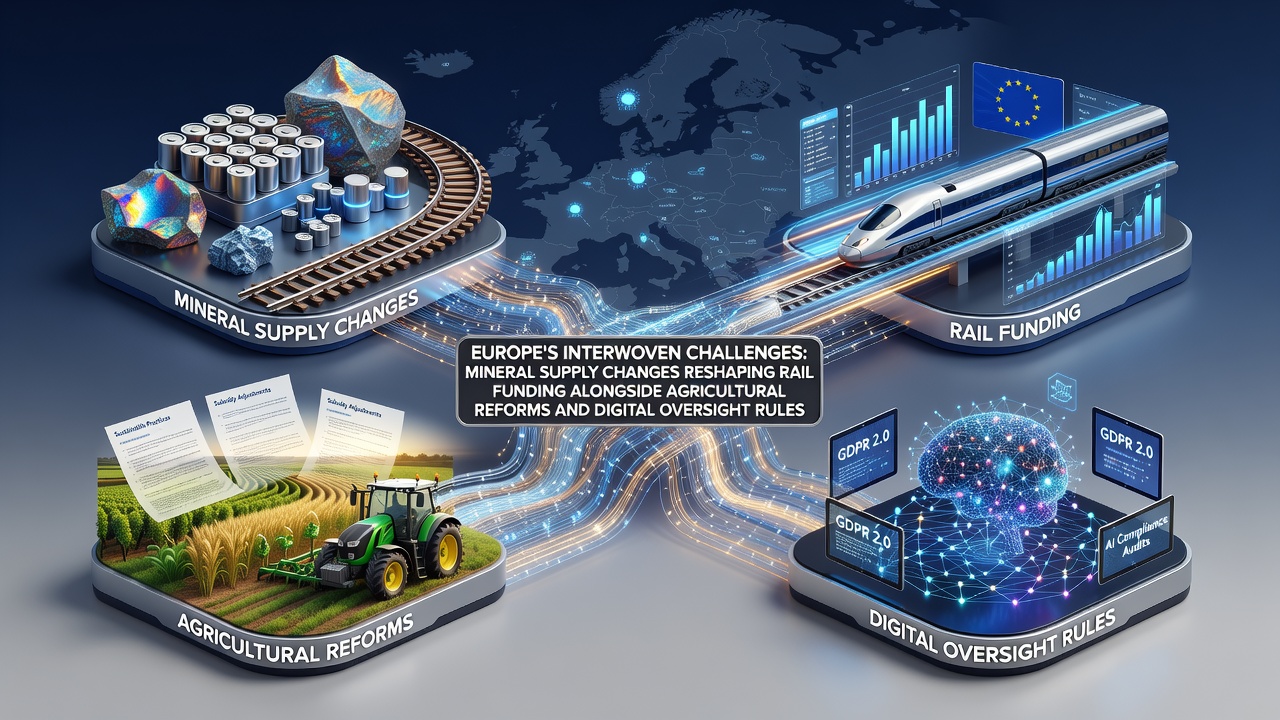
Mineral supply disruptions continue to influence rail funding allocations across Europe as countries adjust procurement strategies for critical raw materials needed in infrastructure projects, and these shifts coincide with ongoing agricultural subsidy reforms plus evolving rules for digital platform operations that require coordinated policy responses from multiple sectors.
European officials track changes in lithium, cobalt, and rare earth element availability because these materials support rail electrification components, signaling systems, and maintenance equipment, while data from the European Commission shows import dependencies have risen in several member states since 2023, prompting reviews of budget lines originally earmarked for track upgrades and rolling stock purchases.
Mineral Availability and Rail Budget Adjustments
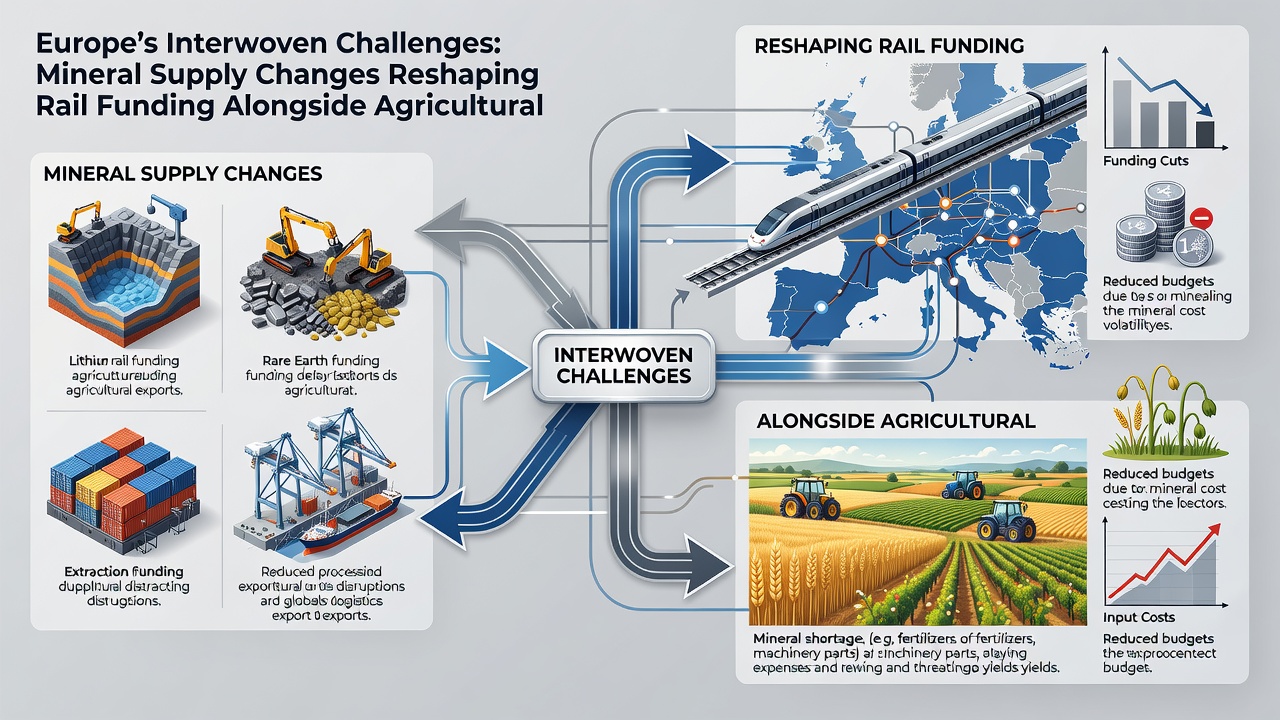
Supply chain analyses indicate that price volatility in key minerals has led transport ministries to delay or scale back certain rail expansion initiatives, and governments in Germany, France, and Poland have reallocated portions of infrastructure funds toward alternative sourcing partnerships with suppliers in Canada and Australia, according to reports from national railway authorities.
Observers note that these adjustments occur alongside efforts to meet emissions reduction targets, which depend on expanded electrified rail networks, yet procurement delays for specialized components have extended project timelines by several quarters in multiple corridors.
Agricultural Reforms in Parallel Policy Streams
Agricultural subsidy programs undergo revisions that aim to align with broader sustainability goals, and these changes intersect with mineral supply concerns because fertilizer production and machinery manufacturing both rely on stable access to processed minerals, while subsidy frameworks now incorporate requirements for reduced chemical inputs that affect equipment specifications used on larger farms.
Researchers at institutions monitoring rural economies have documented how shifts in direct payment structures influence investment decisions by agricultural cooperatives, and these decisions in turn affect demand patterns for rail freight services that transport both harvested crops and imported mineral-based inputs.
Digital Oversight Rules and Cross-Sector Coordination
Digital platform regulations advance through legislative processes that require companies to report on supply chain transparency, including sourcing of minerals used in data center hardware and network equipment, and these reporting obligations create additional data collection needs that connect to rail and agricultural monitoring systems already in development.
Analyses from the OECD highlight how compliance mechanisms for platform accountability overlap with existing transport and farming data infrastructures, leading some national agencies to explore shared verification tools that could reduce duplication while maintaining sector-specific standards.
Developments Anticipated by November 2026
Policy timelines indicate that several member states plan to release updated rail investment plans by November 2026, incorporating revised mineral procurement forecasts, and these releases coincide with scheduled reviews of agricultural direct payment distributions plus assessments of digital service compliance reports submitted earlier in the year.
Coordination meetings among transport, agriculture, and digital affairs ministries have increased in frequency, according to official calendars published by the European Commission, because officials seek to identify efficiencies across funding streams that face simultaneous pressures from external supply factors.
Conclusion
Europe's policy landscape shows mineral supply dynamics influencing rail funding decisions that connect to agricultural reform processes and digital oversight requirements, with upcoming milestones in late 2026 expected to clarify how these areas continue to interact through shared data systems and budget considerations.