Rafael Simon · 12 September 2026
Central European Infrastructure Faces Mounting Pressures from Rail Budget Gaps and Power Network Delays Amid Shifting Supply Chains
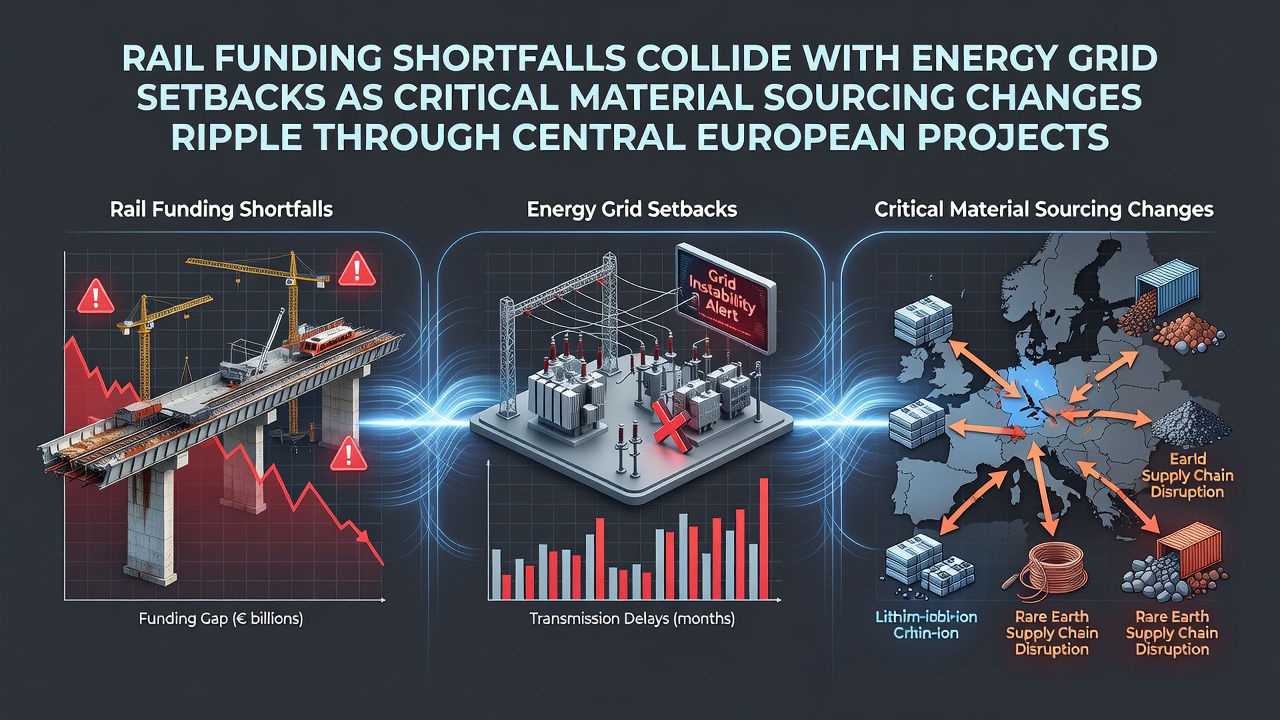
Central European rail and energy projects have encountered overlapping constraints in 2026 as funding shortfalls for rail initiatives intersect with delays in energy grid upgrades, while changes in critical material sourcing add further layers of complexity across Germany, Poland, Austria, and neighboring countries. Reports from the European Commission highlight that rail infrastructure budgets in several member states fell short of projected needs by approximately 15 percent during the first half of the year, forcing project managers to revise timelines and prioritize segments with secured financing.
Those monitoring these developments point to data from national transport ministries showing that rail expansion programs in Germany and Poland absorbed the largest gaps, with total shortfalls reaching 2.8 billion euros by September 2026. At the same time energy grid modernization efforts stalled in multiple regions because supply chain bottlenecks prevented timely delivery of transformers and high-voltage cables, according to figures released by the European Network of Transmission System Operators for Electricity.
Rail Funding Patterns Across the Region
National governments allocated rail funds through multi-year frameworks that assumed steady contributions from both public and private sources, yet revenue projections shifted after inflation adjustments and competing priorities reduced available capital. In Poland, for instance, the national railway authority documented that 12 major track modernization contracts faced partial suspensions when allocations dropped below contract thresholds, while German federal planners adjusted schedules for three high-speed corridor segments that had been slated for completion by late 2027.
Observers note that these adjustments occurred alongside broader European Union cohesion fund reallocations, where some resources moved toward digital infrastructure initiatives rather than physical rail assets. Data compiled by the International Union of Railways indicates that Central European countries collectively reported a 9 percent decline in new rail investment commitments during the second quarter of 2026 compared with the same period in 2025.
Energy Grid Setbacks and Interconnections
Energy grid projects have experienced parallel disruptions, particularly in cross-border interconnection lines that support renewable integration. Austrian and Czech operators postponed commissioning of two 400-kilovolt lines after manufacturers cited extended lead times for specialized conductors, pushing expected operational dates into 2028. The European Network of Transmission System Operators for Electricity published quarterly updates showing that grid reinforcement projects across the region missed 23 percent of their original milestones through September 2026.
These delays compound rail challenges because many rail electrification schemes depend on stable grid capacity for traction power supply. Project teams in Hungary and Slovakia have reported that substation upgrades required for new electric train services now face coordination issues with grid operators whose own timelines slipped.
Critical Material Sourcing Adjustments
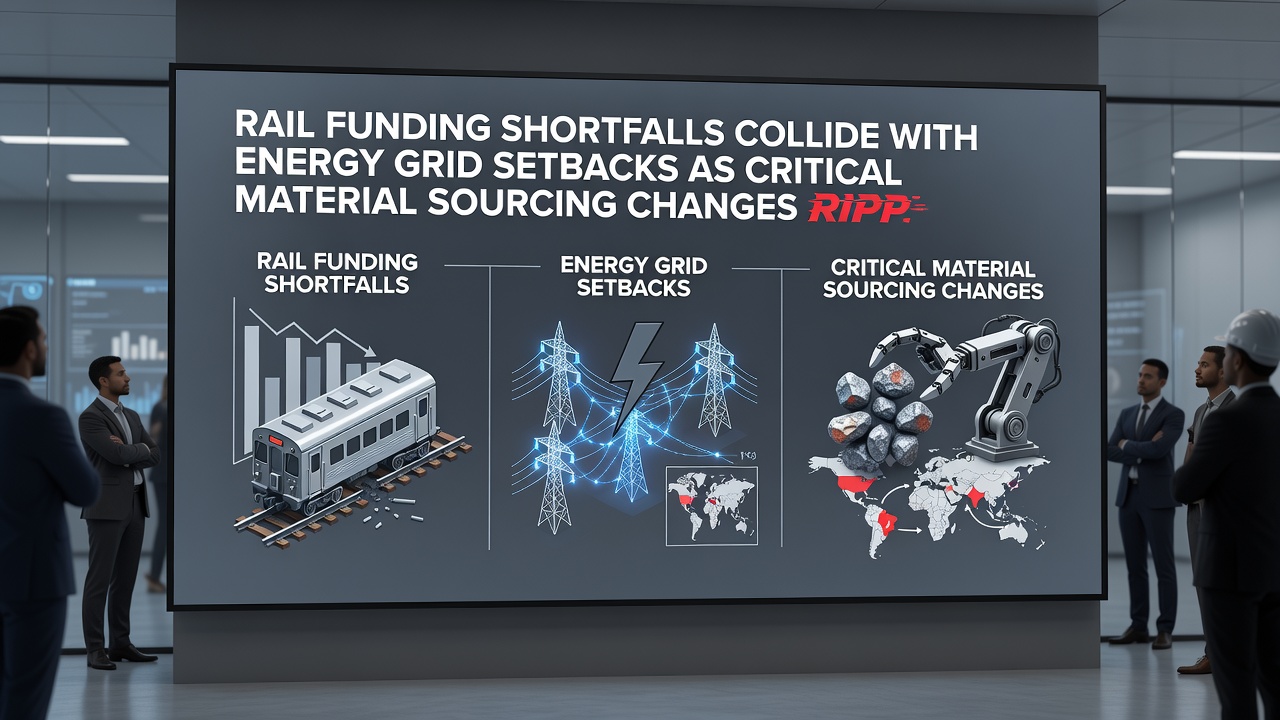
Material sourcing changes have introduced additional variables. Several governments and contractors shifted procurement strategies after export restrictions on certain rare earth elements and copper alloys altered availability from traditional suppliers. Research compiled by the Fraunhofer Institute for Systems and Innovation Research shows that Central European rail and grid projects increased orders from alternative suppliers in North America and Australia by 18 percent in the twelve months ending September 2026.
Those adjustments raised per-unit costs for overhead catenary components and substation switchgear, prompting project leaders to renegotiate contracts and extend procurement phases. One corridor project linking Vienna with Bratislava encountered a four-month delay when specialized steel alloys became unavailable through prior channels, requiring new certification processes for substitute materials.
Combined Effects on Project Delivery
The convergence of these factors has produced measurable impacts on overall delivery schedules. A joint assessment by the European Railway Agency and national energy regulators found that 34 percent of ongoing Central European rail and grid initiatives listed at least two of the three constraints—rail funding gaps, grid setbacks, or material sourcing shifts—as primary risk items in their latest status reports. Construction crews on several sites reduced daily output while awaiting revised material deliveries or updated budget approvals.
Case examples include the Berlin–Warsaw rail upgrade, where electrification phases were sequenced differently to accommodate grid connection uncertainties, and the Budapest ring electrification program, which incorporated modular substation designs to mitigate supply volatility. Both projects maintained core safety and technical standards while adapting sequencing to match available resources.
Conclusion
Central European infrastructure programs continue to navigate these intersecting pressures as planners refine budgets, coordinate grid access, and diversify material pipelines through the remainder of 2026. Official reports from regulatory bodies and research institutions document ongoing adjustments without indicating systemic collapse, while project teams apply revised sequencing and procurement approaches to keep essential corridors moving forward.